

There is a curious phenomenon that unfolds inside boardrooms, executive committees, investor circles, policy forums, and institutions of consequence. Before a role is formally announced, before a strategic initiative is defined, and often before a challenge is fully articulated, certain names begin surfacing in the room. Their names appear with an almost effortless inevitability. No formal assessment has yet occurred. No comparative evaluation has been conducted. Yet somehow, the collective mind of the room has already started moving toward them.
Most observers attribute this phenomenon to reputation, expertise, or accomplishment. While those factors undoubtedly contribute, they do not fully explain why some leaders become the obvious choice while others remain highly capable alternatives. The answer lies in something more profound. It lies in what I call the Gravitas Position.
The Gravitas Position is not a title, a designation, or a carefully manufactured personal brand. It is a form of cognitive and emotional occupancy. It is the territory a leader comes to inhabit in the minds of others long before they enter the room. It is the point at which a name ceases to be merely an identifier and becomes a trusted answer to an unspoken question.
This distinction has become increasingly important in a world overflowing with expertise. Information is abundant. Credentials are abundant. Visibility is abundant. Yet gravitas remains remarkably scarce. The reason is simple. Gravitas is not built through accumulation. It is built through coherence.
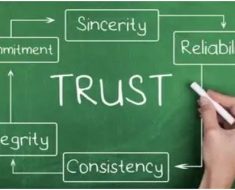
In The Gravitas Blueprint, we describe gravitas as emerging from what we call ontological coherence, an alignment between one’s deepest nature and one’s external expression. Gravitas is not something a person performs. It is something a person becomes. When thought, intention, action, and character begin operating in harmony, people experience a rare sense of congruence. Trust begins to emerge not because of what the leader says, but because of what the leader consistently embodies.
The first overlooked dimension of the Gravitas Position is the architecture of stillness.
Most professionals attempt to increase their influence by becoming more visible. They speak more, publish more, attend more events, join more panels, and continuously expand their public footprint. Yet the leaders who eventually acquire disproportionate influence often move in the opposite direction. They develop an uncommon relationship with stillness.
A Stradivarius violin derives its value not merely from the notes it produces but from the spaces between those notes. The silence is not an absence of music. It is part of the composition. Similarly, exceptional leaders understand that influence is not measured by the volume of their communication but by the weight of their presence.
One of the most dangerous misconceptions in leadership is the belief that visibility creates significance. Visibility can create awareness. Gravitas creates anticipation.
When such leaders speak, people listen not because they speak frequently but because they speak selectively. Their words arrive after reflection rather than reaction. Their opinions emerge from discernment rather than impulse. Over time, this creates a form of psychological trust. People begin associating them with clarity amidst complexity.
In a world increasingly addicted to speed, stillness becomes a strategic differentiator. While others compete for attention, gravitas quietly accumulates authority.
The second dimension concerns the distinction between performative leadership and coherent leadership.
Modern leadership often rewards performance. Leaders are expected to project certainty, confidence, decisiveness, and perpetual optimism. Digital platforms have amplified this tendency, creating an environment where perception frequently outruns substance.
Yet performative leadership possesses an inherent fragility. A beautifully painted façade may impress observers, but its structural weaknesses become evident during a storm. Similarly, leadership that relies primarily upon optics inevitably encounters moments when reality demands something deeper.
In our work on gravitas, we argue that authentic influence emerges through coherence rather than performance. Coherence exists when beliefs, values, decisions, emotions, and actions remain aligned under pressure. It is easy to appear composed during favourable conditions. It is considerably harder to remain congruent when uncertainty, criticism, failure, or complexity arrive.
People possess a remarkable capacity to detect incoherence. They may not articulate it explicitly, but they sense it. They notice when confidence conceals insecurity. They notice when values shift according to convenience. They notice when words and behaviours diverge.
This is why gravitas cannot be manufactured through executive presence training alone. It is an emergent property of alignment. The leader becomes trusted because people experience consistency between what is projected and what is real.
Over time, this consistency compounds into something extraordinary. The individual ceases to be evaluated solely on individual interactions. Instead, they become associated with a predictable quality of judgment. Their name begins travelling through networks ahead of them because others have become confident about what that name represents.
The Gravitas Position emerges precisely at this intersection where perception and reality converge.
The third and perhaps most underappreciated dimension concerns resonance.
Most leadership literature focuses on influence as an act of persuasion. Yet the most powerful leaders often influence without persuading at all.
Consider the role of a tuning fork. When struck, it does not compel nearby instruments to change. It simply vibrates at a stable frequency. Instruments in proximity naturally begin aligning with that frequency.
Human systems operate similarly.
In The Gravitas Blueprint, we describe gravitas through three interconnected dynamics: presence, coherence, and resonance. Presence anchors the individual. Coherence aligns the individual. Resonance extends that alignment outward into the surrounding environment.
The exceptional leader does not dominate the room. They stabilize it.
When uncertainty escalates, they bring calm. When complexity intensifies, they bring clarity. When anxiety spreads, they create steadiness. Their influence is less about control and more about regulation. Others begin thinking more clearly simply because of their presence.
This quality is becoming increasingly valuable as organizations navigate unprecedented levels of complexity. We are moving into an era where leaders are expected not merely to make decisions but to create coherence amidst fragmentation. In such environments, gravitas functions as a stabilizing force rather than a positional advantage.
Indeed, one of the most intriguing ideas explored in our book is that as artificial intelligence assumes greater responsibility for information processing, analysis, and execution, the uniquely human advantage may increasingly reside in presence itself. The capacity to create trust, embody ethical judgment, regulate emotional fields, and stabilize human systems may become more valuable than ever before.
This raises a provocative question about the future of leadership.
Perhaps the most influential leaders will be those who cultivate the deepest coherence. Leaders whose presence communicates trust before they speak. Leaders whose actions consistently reinforce their principles. Leaders whose emotional steadiness creates confidence during turbulence.
The Gravitas Position cannot be claimed. It cannot be demanded. It cannot be purchased through publicity or conferred through hierarchy. It emerges slowly through years of alignment between character and conduct. It is granted by the collective judgment of others who come to view an individual as a source of clarity, stability, and wisdom.
The ultimate leadership question, therefore, may not be whether people know your name. Nor is it whether they follow your content, admire your achievements, or acknowledge your expertise.
The more consequential question is this: when a challenge of consequence emerges in a room where you are absent, does your name simply appear among the options, or has it become the answer before the conversation even begins?
________________________________________________________________________________________
The views and opinions published here belong to the author and do not necessarily reflect the views and opinions of the publisher.