
Part 1 of 2
ChatGPT has a new sponsor — and that changes the vibe
OpenAI’s move into in-chat advertising turns a trusted adviser into a storefront. Conversational ads are a different species of persuasion, and what the shift means for brands
For years, many of us used ChatGPT as an antidote to the modern internet: no SEO sludge, no affiliate listicles, and no ‘review farms’. You asked a question and received a clean, authoritative answer. It felt like a smart friend who did not shout.
Now, OpenAI has rolled out ads for logged-in US adults on the Free and ‘Go’ ($8/month) tiers. These sponsored products appear at the bottom of responses, clearly labelled and separated from organic text. While OpenAI insists ads will not influence core logic, “ads inside a conversation” represent a new species of persuasion with significant trust risks.
Why conversational ads differ from search
Traditional search ads live in a familiar ecology of blue links and visible choices. ChatGPT, however, functions as a conclusion engine. The ad arrives after the model has already filtered alternatives and framed the problem for you. Even a labelled box borrows authority from a response that sounds like objective advice.
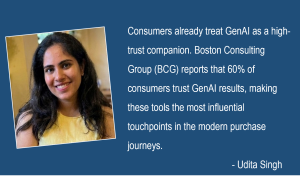
Consumers already treat GenAI as a high-trust companion. Boston Consulting Group (BCG) reports that 60% of consumers trust GenAI results, making these tools the most influential touchpoints in modern purchase journeys. By placing ads here, OpenAI is not just changing monetisation; it is monetising decision-making.
What OpenAI is promising
The new experience is described as ads at the bottom of answers, clearly labelled and separate, with a “Why you’re seeing this” explanation, dismiss controls, and relevance based on the current conversation.
To protect its ‘trustworthy’ image, OpenAI has introduced several constraints: no ads for users under 18, restrictions on sensitive topics such as health and mental health, and paid tiers are expected to remain ad-free in the initial rollout. There is also an economic signal: The Verge reports that OpenAI is exploring premium pricing with limited initial advertiser reporting. In other words, OpenAI appears to believe conversational attention is “closer to decision,” and therefore worth more.
The potential upside for companies
- Explicit, useful intent: In classic marketing, intent is inferred from browser cookies. In AI chat, intent is volunteered as a brief. A user stating, “lactose intolerant, lifting, INR2,000 budget”, is far more actionable than a demographic segment. This may help brands reach people exactly when they are deciding, not merely when they are browsing.
- Frictionless research and purchase: BCG notes that shoppers value GenAI for direct, clutter-free answers. A ‘sponsored shortcut’ can act as a retail assistant, not only comparing products but also providing an immediate checkout link.
- A new discovery lane (especially for brands that explain well): If conversational discovery becomes a real distribution channel, brands with clear proof points and genuinely differentiated benefits may gain share even without dominating search auctions, because the interface rewards clarity and fit.
The downside for companies
- If users smell ‘pay-to-win’, the channel collapses: The real risk is not that people dislike ads; it is that they stop trusting the AI’s logic. If “best” quietly means “highest bidder”, users will abandon the platform. Perplexity AI’s recent pivot away from the in-chat ad format to reassess its strategy serves as a cautionary tale for the industry.
- Measurement gaps: Initial reporting is high-level. Because OpenAI prioritises privacy, advertisers receive aggregated views and clicks but no deep conversion tracking, making it difficult to prove direct ROI.
- Conversational brand safety: “Don’t show my ad next to violence” is old brand safety. In AI, it means avoiding harmful context such as a weight-loss advert appearing after a question about eating disorders. Brands also face “liability by association” if their ad is attached to a hallucinated or incorrect AI answer.
OpenAI has set itself careful guardrails, and brands stand to gain a sharper, more explicit signal of intent than search advertising has ever offered. But the more interesting question is what this shift looks like from the other side of the conversation — the user asking the question.
Continues in Part 2: Shopper or scholar: what ChatGPT’s ads mean for you
Part 2 looks at what conversational advertising means for consumers, why AI tools appear to be choosing different identities for different parts of our lives, and what both brands and users can do about it.
About the author: Udita Singh is a PGDM alum from the S.P. Jain Institute of Management & Research (SPJIMR).
Views are personal.
____________________________________________________________________________
The views and opinions published here belong to the author and do not necessarily reflect the views and opinions of the publisher.