

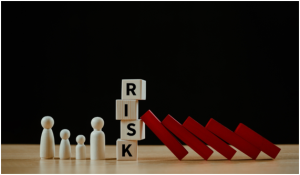
Crises don’t just emerge suddenly. They usually develop over time, stemming from minor errors, delayed choices, and overlooked warnings. In the Gulf markets, known for their rapid movements and keen observation, these initial warning signs become visible swiftly, leading to significant repercussions. What begins as a contained issue can elevate, magnified by digital ecosystems as well as interpreted across multiple audiences in real time. The sheer speed of this transformation leaves very little room for reactive decision-making.
This is where preparation becomes paramount. Organisations that respond successfully do not formulate a strategy on the spot; they execute it. They already possess internal unity, structured communication, and clearly defined roles. In such an environment, resilience is less about preventing disruption and more about ensuring that when it occurs, it does not undermine the organisation’s credibility.
Growth Creates Risk Before It Reveals It
High-growth sectors usually move faster than the systems that govern them. In fintech, expansion across jurisdictions can expose gaps in compliance, data protection or transaction oversight, issues that surface when regulatory attention intensifies. In sustainability-led organisations, reputational risk typically emerges when ESG commitments are tested against operational realities, especially when disclosures and on-ground impact fall out of sync. These risks rarely appear during stable periods. They crystallise under scrutiny, a regulatory query, an audit trigger, or a public conversation that questions intent versus execution. In Gulf markets, including hubs such as Dubai, where regulation evolves alongside innovation, these moments are highly visible and quickly amplified.
As a result, structured risk mapping must extend beyond operations to predict reputational triggers, where compliance gaps, messaging ambiguity or stakeholder expectations may intersect under pressure.
Structure Is What Contains Speed
When disruption occurs, speed is inevitable. What determines the outcome is structure. For instance, a platform outage in a scaling fintech business or a sustainability claim under public challenge can quickly escalate without predefined protocols. Teams act in parallel, approvals delay communication, and messaging begins to diverge. What began as a manageable issue becomes prolonged.
Meanwhile, an effective response depends on disciplined frameworks. Escalation mechanisms are in place, decision rights are clearly assigned, and coordination across functions is immediate. Legal, communications, operations as well as leadership are tightly aligned.
In the Gulf context, this structure is required to reflect regulatory expectations. A response that is fast but misaligned with local sensitivities can deepen scrutiny. Preparedness is grounded in systems that remain effective under pressure.
Alignment Determines Crisis Perception
Crises are shaped as much by communication as by fact. In high-growth environments like Dubai, multiple voices tend to surface simultaneously. Without alignment, this results in fragmented narratives that can corrode trust more swiftly than the challenge itself. Delays in clarification or inconsistency in tone only increase the chances of uncertainty.
In addition, disciplined communication is pivotal. Messaging must be clear, verified plus consistent across all stakeholders, requiring alignment in advance, with leadership, legal, and communications operating from a single narrative.
Simulation-led training builds this discipline. It significantly prepares teams to respond with clarity and composure while making sure that communication reinforces stability rather than amplifying confusion.
Media Protocol Is the Control Mechanism
In fast-moving environments, how an organisation engages with media can shape the trajectory of a crisis. Media protocol defines response timelines, approval hierarchies, spokesperson roles, and channel prioritisation. In its absence, even minor delays or unverified responses can create space for speculation.
In the MENA region, where traditional media, digital platforms, and regulatory communication intersect, coordination becomes critical. Press statements, social updates, and internal messaging are therefore required to reinforce a single narrative.
Organisations that embed media protocols into crisis frameworks are better positioned to manage not just information but interpretation, reducing the risk of escalation driven by inconsistency.
Reputation Moves Faster Than Response
Digital platforms have hastened how crises unfold. Issues are now interpreted and amplified in real time, usually ahead of formal response. For example, in fintech platforms, customer concerns can gain traction before resolution is complete.
As a result, continuous monitoring, prompt acknowledgement, and message consistency are critical. Silence fuels uncertainty, while fragmented responses erode confidence. Credibility is defined not just by speed but by coherence across touchpoints. Crisis response, therefore, becomes an ongoing process, requiring firms to engage and stabilise narratives as they evolve.
Preparedness Is What Sustains Growth
In high-growth markets, reputational risk is structural. The more visible an organisation becomes, the narrower the margin for misalignment. Preparedness is not a defensive layer; it is a core capability that enables sustained growth. Organisations that invest in risk mapping, structured frameworks, aligned communication, and clear media protocols are better equipped to manage disruption without losing trust.
In the Gulf, where ambition is matched by accountability, this capability is increasingly non-negotiable. Crises will occur. However, the differentiator lies in whether they are contained with clarity or allowed to evolve into disorder. In sum, the absence of chaos is never accidental. It is built via foresight, discipline and systems that guarantee a response remains steady, even under pressure.
__________________________________________________________________________________
The views and opinions published here belong to the author and do not necessarily reflect the views and opinions of the publisher.