
By Ankoor Dasguupta
When storms became violent, the danger was not always the waves outside. Sometimes, the real threat emerged from inside the vessel itself. Different compartments of the ship were designed to remain sealed for protection. But during a crisis, if those compartments stayed shut for too long, sailors could not communicate fast enough, supplies could not move where needed, and the ship slowly became a collection of isolated survival units instead of one living organism.
Many organizations today resemble those ships.
Departments function like watertight chambers. Marketing does not fully understand operations. Sales mistrust finance. HR builds culture decks while employees quietly disengage. Teams coexist under one logo but often operate as separate countries with different languages, priorities, and emotional climates. The irony is that silos are rarely created by incompetence. Most are created by success. As organisations grow, specialisation increases. Teams become efficient within their own boundaries. But over time, efficiency without integration creates organisational blindness.
Breaking silos, therefore, is not about forcing collaboration workshops or scheduling more meetings. It is about redesigning how people experience ownership, trust, and relevance inside the organisation.
Here are three unconventional yet deeply effective ways leaders can begin doing that.
- Stop Organising Around Functions. Start Organising Around Tensions.
Most organisations are structured around functions because it appears logical on paper. Marketing handles branding. Sales handles revenue. Product handles innovation. But customers do not experience organisations functionally. They experience them emotionally and holistically.
The real breakthrough happens when organisations start aligning teams around shared tensions instead of isolated responsibilities.
For instance,
- “How do we reduce customer drop-offs?”
- “How do we improve trust?”
- “How do we shorten decision cycles?”
- “How do we create delight at scale?”
These are not department problems. They are organizational tensions.
When teams rally around tensions instead of titles, conversations change. A finance leader starts contributing to customer experience discussions. Creative teams begin understanding operational constraints. Product teams start listening to emotional feedback rather than just technical specifications.
Okay, let me know if you find this relatable; one global hospitality brand quietly transformed internal collaboration by replacing departmental quarterly goals with enterprise-wide ‘friction reduction missions.’ Suddenly, housekeeping, technology, guest relations, and operations were solving the same problem together. The organisation did not become less specialized. It became more interconnected.
Silos weaken when people stop defending territories and start solving shared human problems.
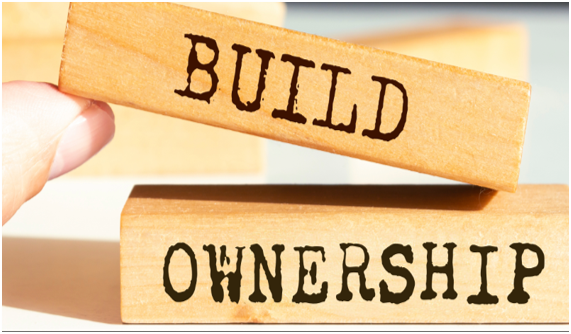
- Create Fewer Handoffs and More Shared Ownership
Many silos are built not through hierarchy, but through handoffs. One team creates the strategy. Another executes it. A third measures it. A fourth explains why it did not work.
This relay-race model creates emotional detachment. People contribute to fragments but rarely feel accountable for outcomes. High-performing organisations operate differently. They reduce transactional handoffs and increase shared ownership windows.
This means:
- Strategy teams sitting inside execution reviews
- Creative teams seeing customer feedback firsthand
- Data teams participating before campaigns launch, not after they fail
- Leaders co-owning metrics instead of assigning blame downstream
In one advertising agency, a simple shift changed the culture dramatically. Instead of creative, media, and performance teams presenting separately to clients, they presented together as one integrated growth unit. Internally, this altered behavior faster than any culture training program could. Teams started preparing together because visibility became collective.
People collaborate better when success and failure are experienced together.
Silos survive in environments where accountability is divided. They dissolve in environments where ownership overlaps.
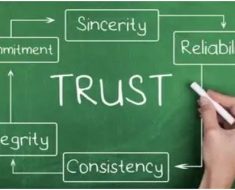
- Build Informal Trust, Not Just Formal Structure
Organisations often attempt to solve silos structurally. They redesign reporting lines, create matrices, or introduce collaboration software. But silos are rarely structural alone. They are emotional. People collaborate more easily with those they trust, understand, and feel psychologically safe around. That is why some of the most connected organizations invest heavily in informal human bridges.
Not forced fun. Not artificial team-building exercises. Real human exposure.
Leaders should create environments where employees see the person behind the designation:
- Cross-functional shadowing
- Reverse mentoring
- Informal problem-solving circles
- Leadership AMA sessions
- Temporary role immersions
A technology company once introduced a practice where engineers had to spend one day every quarter with customer support teams listening to live complaints. Within months, the tension between product and service departments reduced significantly. Empathy achieved what escalation meetings never could.
The future of collaboration will not belong to organisations with the most sophisticated structures. It will belong to organisations with the strongest relational intelligence.
Because ultimately, silos are not walls made of systems. They are walls made of unfamiliarity.
And unfamiliarity disappears the moment people begin seeing themselves as contributors to one larger story rather than protectors of smaller territories.
_____________________________________________________________________
The views and opinions published here belong to the author and do not necessarily reflect the views and opinions of the publisher.