
AI has quickly become part of everyday life in advertising. A few years ago, most agencies were only experimenting with it. Now it’s being used for everything from ad targeting and campaign planning to content ideas and performance tracking. The industry is moving fast, and honestly, many teams are still figuring things out as they go.
What’s interesting is that this shift is not being shaped by technology alone. The people leading these companies are influencing how AI actually gets used, and more women are starting to play a major role in those decisions.
Advertising has always depended on understanding people. Trends may help campaigns stay relevant, but what truly connects with people is emotion. The campaigns that leave a lasting impact are usually the ones that feel real and relatable to everyday experiences. Technology can quickly process large volumes of information, but understanding human feelings, cultural sensitivities, humor, and the little details that influence how people respond is still far more complex.
No matter how advanced technology becomes, people still respond most strongly to communication that feels personal, honest, and human, especially in today’s environment. Across many agencies, women leaders are helping teams look at AI in a more thoughtful and practical way instead of treating it as just another trend. Instead of looking at automation as the ultimate goal, the focus is often on how technology can support creativity rather than replace it. That difference matters. Nobody remembers an ad because the targeting algorithm worked perfectly. People remember stories, ideas, and emotions.
AI is definitely making work faster. Teams are now able to cut down the time spent on routine work, making it easier to study audience preferences and focus more on the creative side of campaigns. In many agencies, that’s creating more room for creative thinking and strategy. But there’s also anxiety around it. There are also people in the industry who feel concerned that, over time, increased automation may start replacing parts of the creative work that agencies have always relied on.
This is exactly the kind of situation where strong and sensible leadership really makes a difference. The agencies handling these changes well are often the ones where employees are given the confidence to grow with new ways of working rather than constantly worrying about being replaced. That kind of environment only develops when leaders take the time to listen, communicate clearly, and support their teams through the transition. It also requires leaders who understand both technology and people.
There’s another side to this conversation that deserves more attention: ethics. With advertising becoming increasingly dependent on data and digital tools, discussions around privacy, fair representation, and responsible communication are getting more attention than before. Since many of these systems learn from past behaviour and existing information, there is always a risk of old prejudices quietly finding their way into campaigns, sometimes without brands realizing it until much later. Diverse leadership helps catch those blind spots earlier. Different perspectives lead to better questions, and better questions usually lead to better decisions.
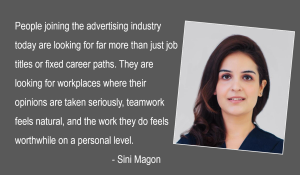
The industry is also changing internally. People joining the advertising industry today are looking for far more than just job titles or fixed career paths. They are looking for workplaces where their opinions are taken seriously, teamwork feels natural, and the work they do feels worthwhile on a personal level. They also want to see real opportunities to learn and move forward in their careers. Agencies that are focusing on mentoring, guidance, and employee growth are finding it easier to keep pace in an industry that keeps evolving year after year.
At the same time, original thinking and fresh ideas are becoming far more important than before, not less. AI can improve efficiency, but efficiency alone does not build memorable brands. The companies that stand out will be the ones that know how to combine technology with human insight. Data can tell what people click on. It cannot fully explain why something emotionally resonates with them.
That’s why the growing influence of women leaders in advertising feels important right now. They are not just helping agencies adopt new tools. They are influencing the way those tools are being integrated into creative culture, team dynamics, and decision-making.
The future of advertising will obviously involve AI. There’s no real debate about that anymore. The bigger question is what kind of industry is being built around it, and who gets to shape that future.
Technology may be driving the change, but people will decide whether that change actually improves the industry or simply makes it faster.
_________________________________________________________________________________
The views and opinions published here belong to the author and do not necessarily reflect the views and opinions of the publisher.